NACCIMA, Chinese Consulate in Lagos, other stakeholders gather to discuss AI for sustainable economic development
The Nigerian Association of Chambers of Commerce, Industry, Mines and Agriculture (NACCIMA) on Wednesday joined the Consulate General of the People’s Republic of China in Lagos, the Nigerian Institute of International Affairs (NIIA), the Institute of African Studies, Zhejiang Normal University, China (IASZNU), and other stakeholders to deliberate on the transformative role of Artificial Intelligence (AI) in advancing economic development and sustainable growth.
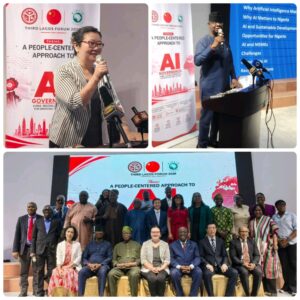
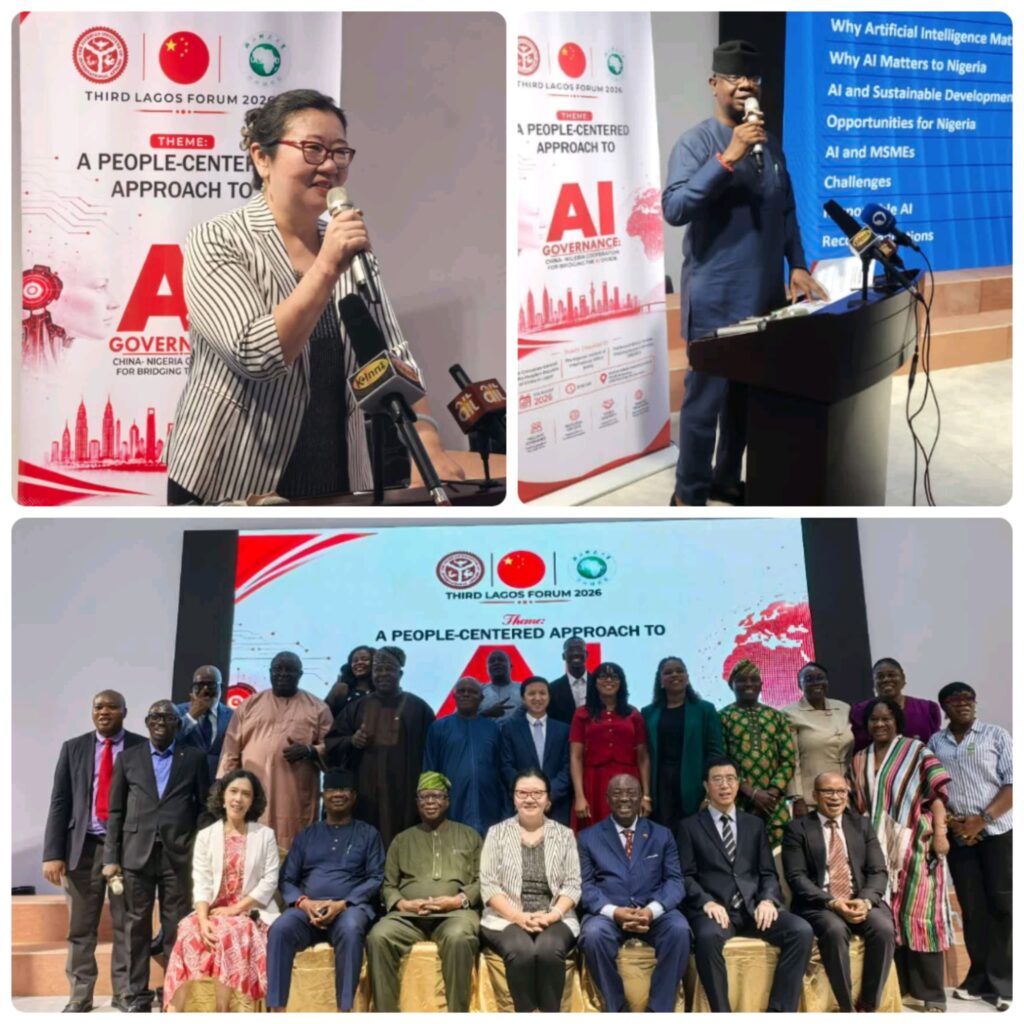
The event, tagged the Third Lagos Forum 2026, was organised by the Chinese Consulate in collaboration with NIIA and IASZNU. It held at the Shaolin Kungfu Restaurant in Lekki, Lagos State with the theme ‘A People-Centred Approach to AI Governance: China–Nigeria Cooperation for Bridging the AI Divide’.
Attended by members of the Chinese diplomatic community, academics from Nigerian and Chinese universities, faculty members and research fellows from the Nigerian Institute of International Affairs, representatives of the private sector, research institutions, development partners, civil society organisations, and the media, the event underscored the need to develop AI systems that place people at the centre of technological innovation while promoting ethical standards, transparency, accountability, digital inclusion, capacity development, and equitable access to emerging technologies.
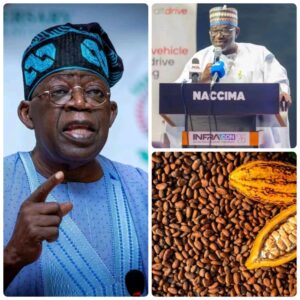
In his presentation on the topic ‘AI for Sustainable Development’, Director General of NACCIMA, Engr. Sola Obadimu, advocated the deployment of Artificial Intelligence (AI) as a tool to improve productivity, promote trade competitiveness, accelerate inclusive economic growth and strengthen healthcare systems in Nigeria.
The NACCIMA DG charged Nigerians to use AI tools responsibly and meaningfully, while borrowing a leaf from the technological advancements in China. Obadimu also called for sustained investments in digital infrastructure, human capital, research and innovation, and a stronger public-private partnership.
According to him, “The successful adoption of Artificial Intelligence in Nigeria requires sustained investment in digital infrastructure, the development of human capital and digital skills, increased investment in research and innovation, strengthened public-private partnerships, and enhanced collaboration between governments, academia, industry, and development partners.
“AI should be deployed as a tool for improving productivity, supporting Micro, Small and Medium Enterprises (MSMEs), enhancing agricultural productivity, strengthening healthcare systems, improving education, promoting trade competitiveness, and accelerating inclusive economic growth,” he added.
The Third Lagos Forum 2026 featured discussions on strengthening China–Nigeria cooperation in promoting inclusive AI governance, expanding access to AI technologies, narrowing the digital divide, and ensuring that the benefits of AI are equitably shared across society.
The forum also highlighted the importance of deepening China–Nigeria cooperation in the areas of knowledge exchange, capacity building, joint research initiatives, digital infrastructure development, AI innovation ecosystems, and technology partnerships that support sustainable development objectives. Participants encouraged stronger collaboration among governments, the private sector, academia, development partners, and civil society in developing policies and governance frameworks that foster responsible AI adoption while safeguarding public interest.
The Third Lagos Forum 2026 provided a valuable platform for constructive dialogue on the future of Artificial Intelligence and reaffirmed the shared commitment of Nigeria and China to promoting a people-centred approach to AI governance.
The event was attended by the Chinese Consul-General in Lagos, Her Excellency, Yan Yuqing, who was also the Chief Host.
Other participants included but not limited to Prof. Eghosa Osaghae, Director General, Nigerian Institute of International Affairs represented by Prof. Femi Otubanjo; Prof. Liu Hongwu, Director, Institute of Africa Studies, Zhejiang Normal University, Jinhua, China; His Excellency, Chief Jonathan Coker, former Nigerian Ambassador to China; Wang Yue, Deputy Consul-General, People’s Republic of China in Lagos; Dr. Zhang Sai, Institute of Africa Studies, Zhejiang Normal University, Jinhua, China; Representative of Huawei Nigeria, Beauty Ogbologu Esq.